



Metal Injection Molding vs Die Casting: What Is the Difference?
By Yizejing
08, 2026
When engineers and purchasing teams compare metal injection molding vs die casting, the right question is not simply which process is better.
In general:
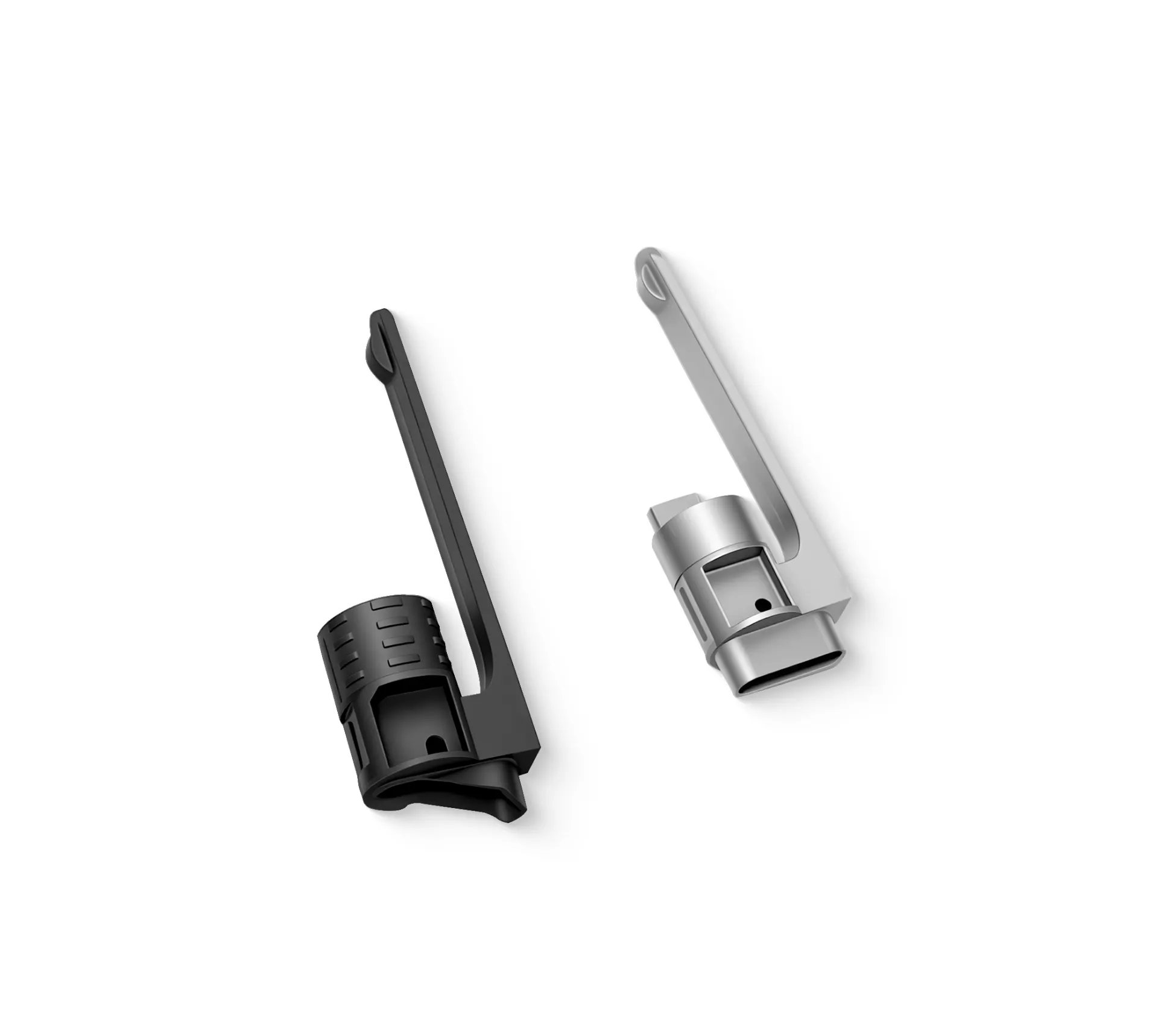
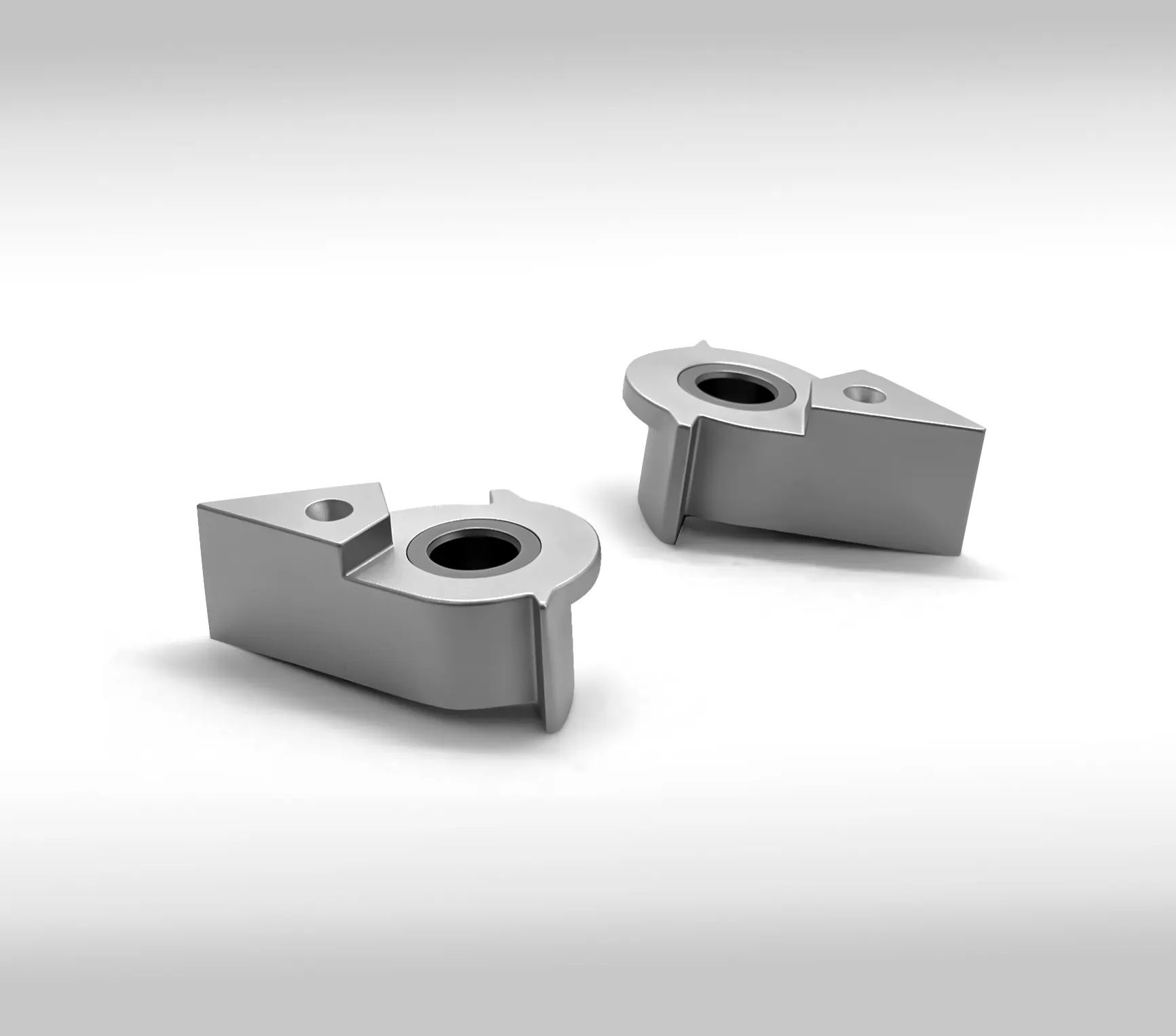
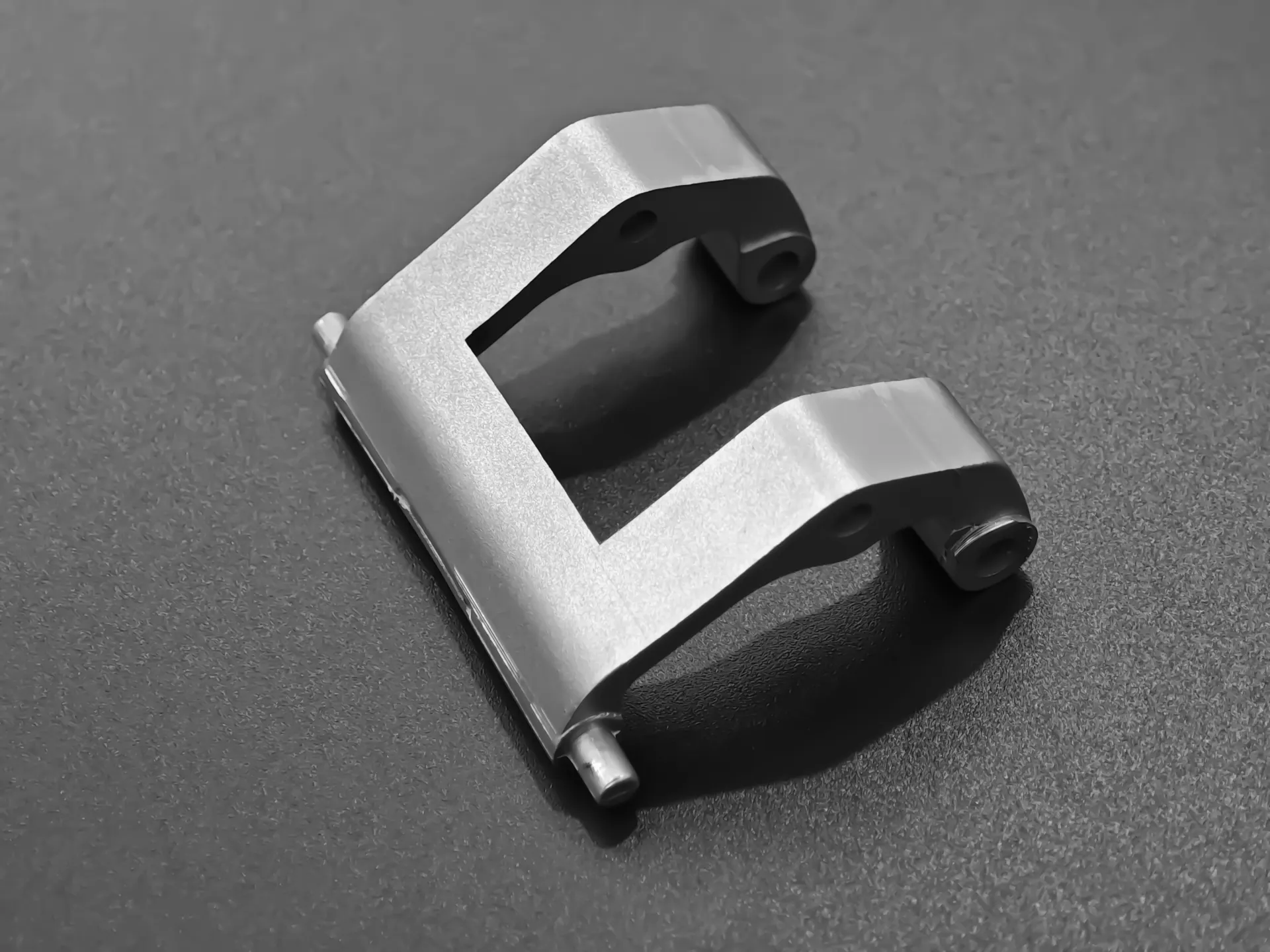
MIM is better for small, highly complex precision metal parts.
Die casting is better for larger metal components and high-volume production.
Material selection is often the first factor that determines which process is possible.
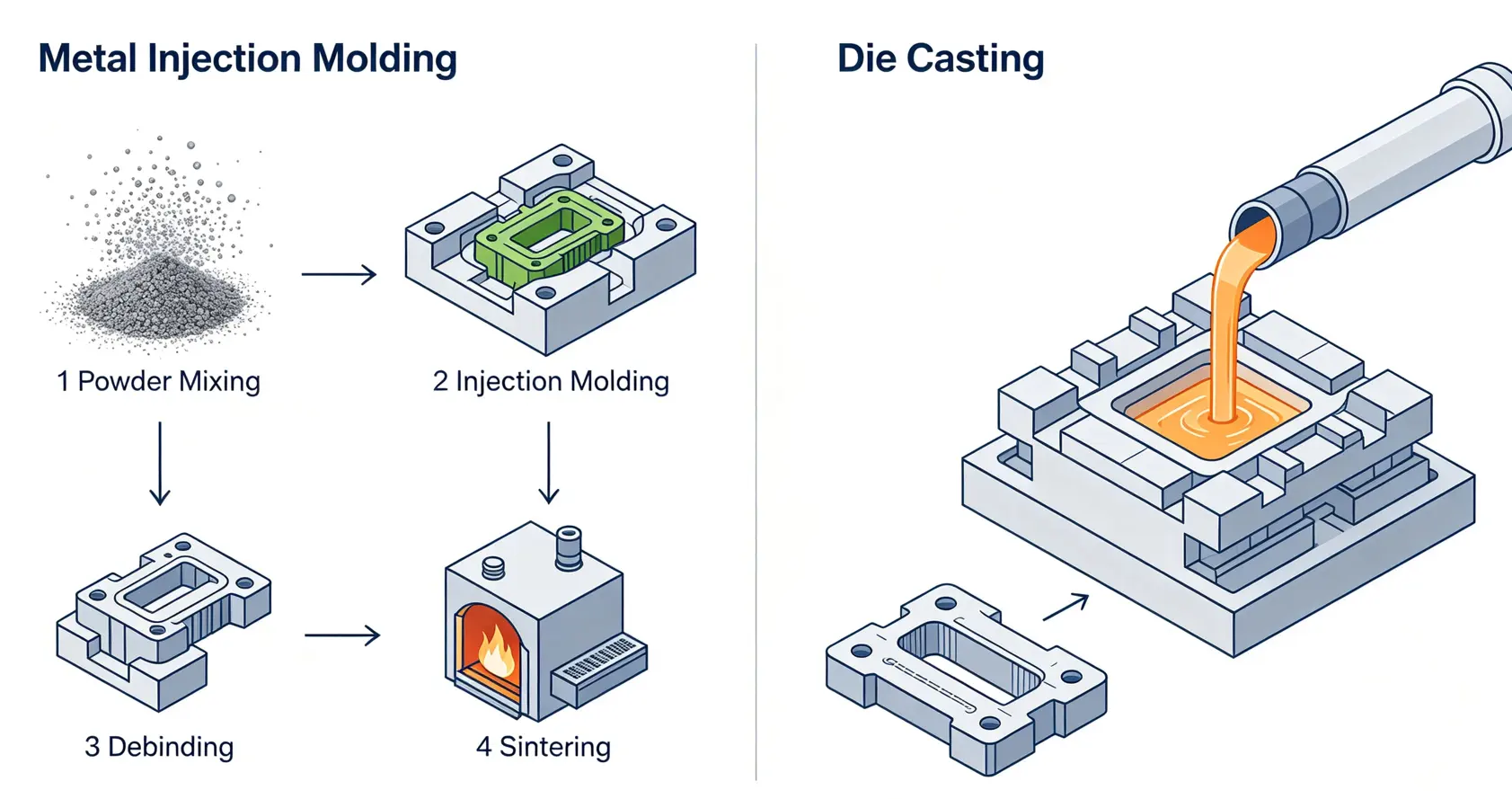
MIM vs Die Casting: Quick Comparison
| Factor | Metal Injection Molding (MIM) | Die Casting |
| Main materials | Stainless steel, tool steel, titanium, nickel, cobalt alloys, etc. | Aluminum, zinc, magnesium and other suitable alloys |
| Part size | Typically small parts | Small to large parts |
| Geometry | Excellent for highly complex shapes | Good for complex shapes |
| Thin features | Excellent for small precision features | Good |
| Dimensional control | High | High |
| Production volume | Medium to high | Medium to very high |
| Tooling cost | Moderate to high | High |
| Material flexibility | High | More limited |
| Secondary machining | Often minimized | May be required |
| Typical applications | Medical, electronics, automotive, precision components | Automotive, electronics housings, industrial components |
| Best advantage | Complex small metal parts | Fast production of larger metal parts |
MIM is particularly suited to complex geometries and high production rates using multi-cavity tooling, while die casting is widely used for high-productivity production of non-ferrous metal components.
1. Metal Injection Molding Process
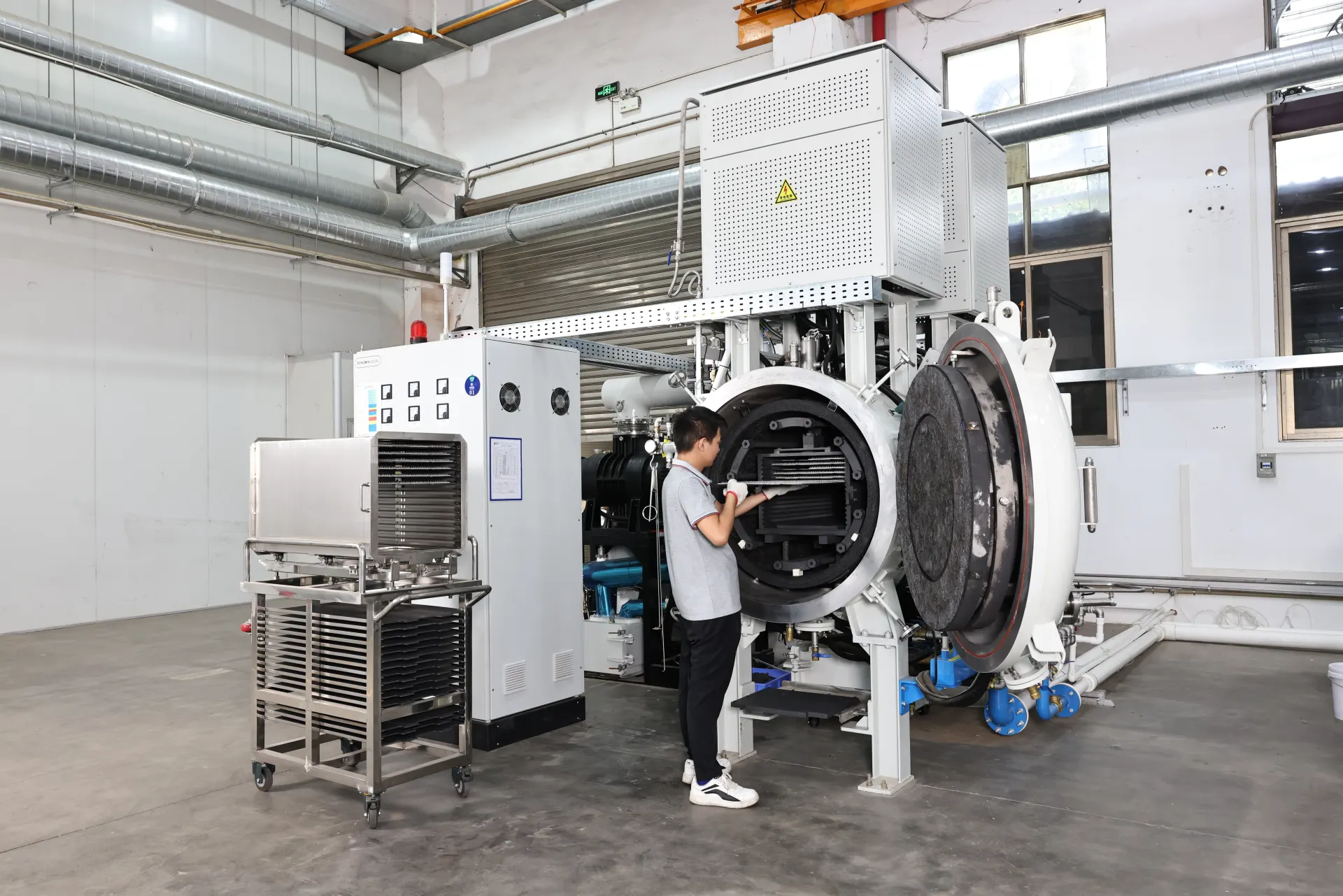
MIM combines powder metallurgy with injection molding.
The basic process is:
Metal Powder → Feedstock → Injection Molding → Debinding → Sintering → Finished MIM Part
Fine metal powders are mixed with a binder system to create a feedstock. The material is then injected into a mold to create a green part. After molding, the binder is removed and the part is sintered at high temperature to achieve its final properties and dimensions.
This process makes MIM particularly attractive when a component has:
- Small overall dimensions
- Complex 3D geometry
- Fine details
- Internal features
- Multiple functional features
- High production volumes
MIM can process a wide range of alloys, including stainless steels, tool steels, cobalt alloys, nickel alloys and titanium alloys.
2. Die Casting Process
Die casting uses a different approach.
Molten metal is injected into a steel mold under high pressure. The metal rapidly fills the cavity, solidifies and is then ejected from the die.
Common die casting materials include:
- Aluminum alloys
- Zinc alloys
- Magnesium alloys
- Certain copper-based alloys
Die casting is widely used because it can produce complex parts quickly and efficiently, making it particularly suitable for high-volume production.
Typical applications include:
- Automotive housings
- Electronic enclosures
- Heat sinks
- Brackets
- Hardware
- Industrial components
3. MIM vs Die Casting: Which Has Better Design Capability?
This is one of the most important differences.
MIM
MIM is especially strong when the component is small and geometrically complex.
Features such as:
- Fine ribs
- Small holes
- Threads
- Slots
- Curved surfaces
- Complex 3D structures
can often be incorporated into the mold rather than produced through extensive machining.
The Metal Injection Molding Association describes MIM as a near-net-shape process capable of producing complex geometries with good dimensional control.
Die Casting
Die casting can also produce complex shapes and thin-wall structures. However, the design must consider factors such as:
- Draft angles
- Wall thickness
- Metal flow
- Ejection
- Shrinkage
- Porosity
Therefore, die casting can be an excellent choice when the part is larger and the geometry is suitable for casting.
Winner for highly complex small parts: MIM
Winner for larger structural castings: Die Casting
4. MIM vs Die Casting: Which Is More Cost-Effective?
There is no universal answer.
The total cost depends on:
Material + Tooling + Production Volume + Part Complexity + Secondary Operations
Die casting can have high tooling and equipment costs, which means it becomes more attractive as production volume increases.
MIM also requires specialized tooling and additional debinding and sintering operations. However, its near-net-shape capability can reduce machining and assembly requirements for complex parts.
For example:
Simple + large + high volume → Die Casting may be more economical
Small + complex + high volume → MIM may be more economical
The key is to compare the total cost per finished part, rather than only comparing mold prices.
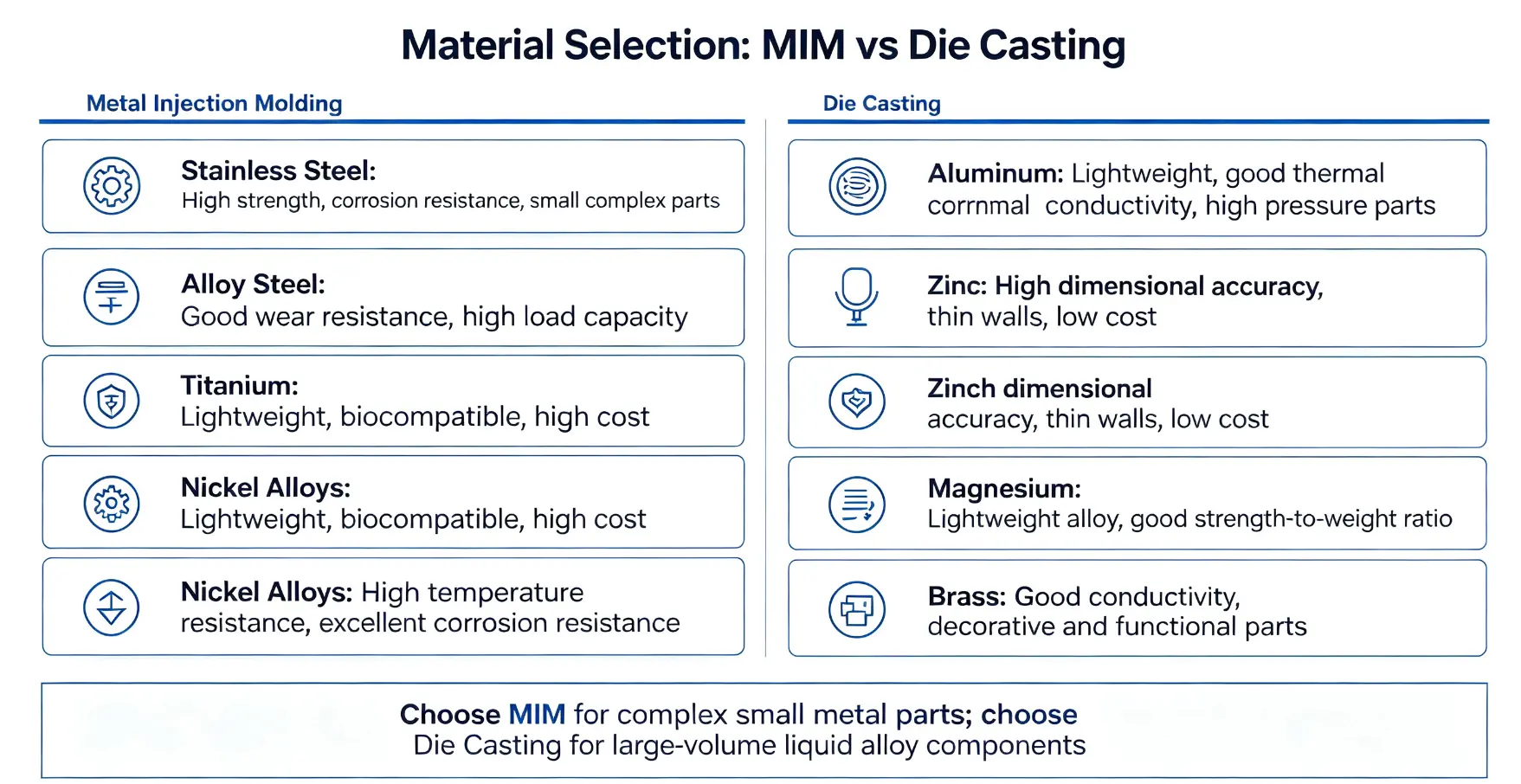
5. MIM vs Die Casting: Material Selection
Material is often the first factor to check.
MIM supports many alloys that are difficult or unsuitable for conventional die casting, including stainless steels, tool steels, titanium and other specialty alloys.
Die casting is primarily associated with non-ferrous alloys such as aluminum, zinc and magnesium.
Therefore, if your design requires:
- Stainless steel
- Tool steel
- Titanium
- Cobalt alloy
- Nickel alloy
MIM may be the more suitable manufacturing process.
If your design requires:
- Aluminum
- Zinc
- Magnesium
Die casting should be considered first.
6. When Should You Choose MIM?
Choose Metal Injection Molding when your project has most of the following characteristics:
- Small or miniature metal components
- Complex 3D geometry
- High production volume
- Tight dimensional requirements
- Multiple integrated features
- Stainless steel or specialty alloy requirements
- Minimal machining preferred
- Medical, electronics or precision applications
MIM is commonly used in medical, dental, automotive, aerospace, electronics and other precision industries.
7. When Should You Choose Die Casting?
Choose die casting when:
- The part is relatively large
- Aluminum, zinc or magnesium is suitable
- Production volume is high
- Fast cycle times are important
- Lightweight structural components are required
- The design is suitable for casting
- The cost of tooling can be distributed over a large production volume
Die casting is especially attractive for high-volume components where productivity and material utilization are important.
8. MIM vs Die Casting: Which One Should You Choose?
A simple decision guide is:
Choose MIM if:
Small + Complex + Precision + Specialty Alloy
Choose Die Casting if:
Larger + Non-Ferrous Alloy + High Volume + Fast Production
The most important factors are:
- Part size
- Part complexity
- Material
- Annual production volume
- Required tolerance
- Secondary machining
- Tooling investment
- Target unit cost
There is no single manufacturing process that is best for every metal component.
Conclusion
Metal Injection Molding vs Die Casting is not simply a competition between two manufacturing processes.
The correct choice depends on the combination of material, part size, geometry, production volume, precision and total cost.
For small, complex and high-volume precision metal components, MIM is often the better solution.
For larger aluminum, zinc or magnesium components requiring high production efficiency, die casting can be the better choice.
Looking for a Metal Injection Molding Manufacturer?
Yize MIM provides custom metal injection molding for complex, high-precision components. Send us your 3D drawing, material requirements and annual volume for a DFM evaluation.
FAQ
Is MIM better than die casting?
Not necessarily. MIM is generally better for small, complex and precision metal components, while die casting is often more suitable for larger aluminum, zinc or magnesium parts produced in high volumes.
Is MIM more expensive than die casting?
MIM can involve more processing steps because it requires debinding and sintering. However, for complex small parts, MIM can reduce machining and assembly costs. The best comparison should be based on total production cost rather than tooling cost alone.
Can MIM replace die casting?
In some applications, yes. However, MIM and die casting have different material and size ranges. If the component is large and made from aluminum or magnesium, die casting may be more appropriate. If it is a small, complex stainless-steel component, MIM may be a better choice.
Which process is better for small complex metal parts?
MIM is usually the stronger option. Its injection molding approach allows complex geometries to be produced as near-net-shape components, reducing the need for extensive machining.
Share on Social: